
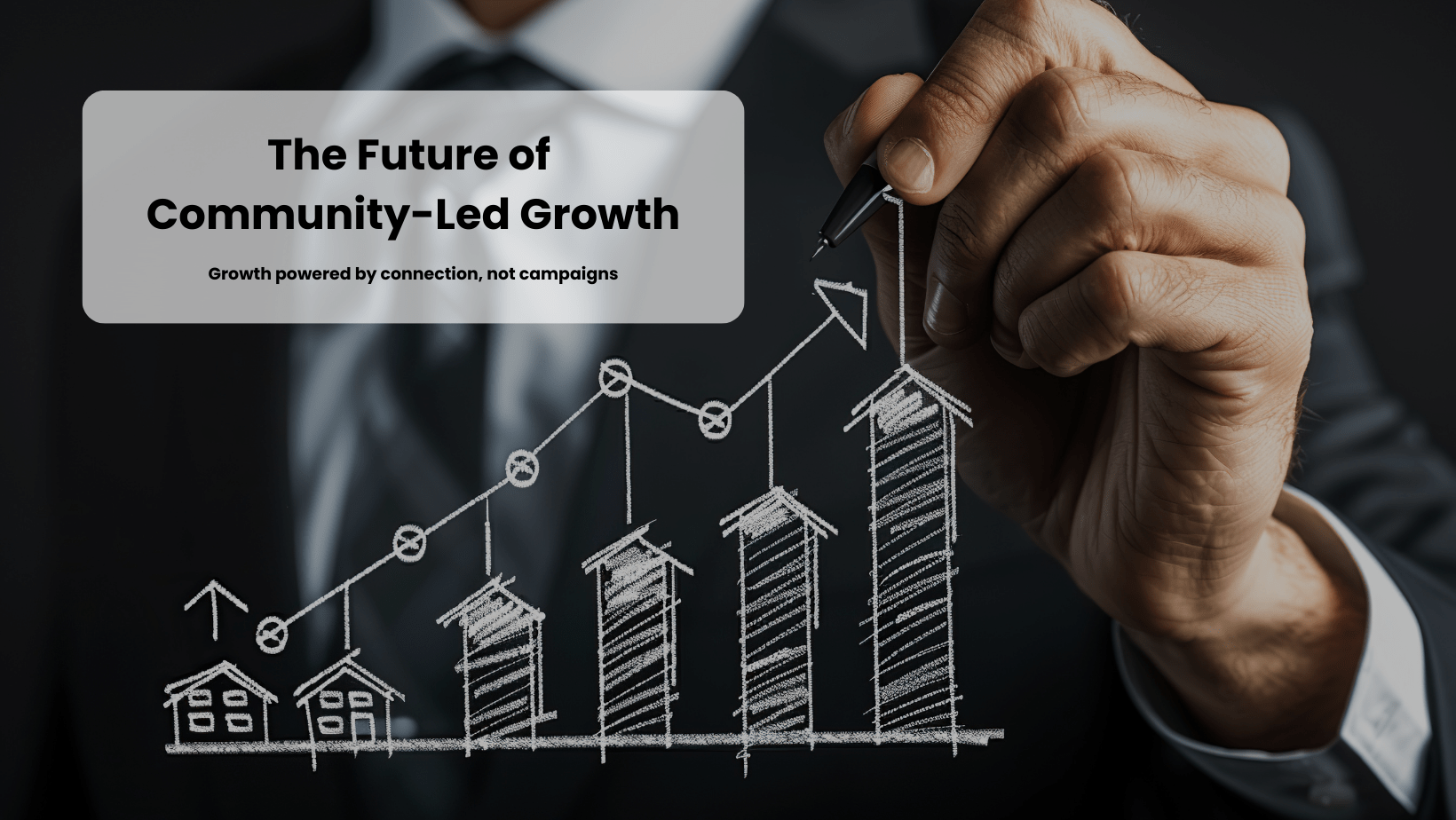
Community-led growth is no longer optional. It’s becoming one of the most reliable ways to build trust, retention, and long-term revenue.
Audiences scroll. Communities stay.
As paid acquisition costs rise and organic reach continues to decline, brands are realizing that growth doesn’t come from louder messaging—it comes from stronger relationships. The brands that win aren’t chasing reach. They’re building ecosystems where customers, prospects, and partners interact with each other, not just the brand.
Community is no longer a “nice-to-have” marketing channel. It is a core growth strategy.
Community Growth Keys

Engage, Don’t Broadcast
👉 Most brands treat community like a content feed. That’s the fastest way to lose engagement.
Community-led brands design for interaction, not consumption. The goal is not more posts—it’s better conversations.
What this looks like in practice: Instead of publishing updates and announcements, you ask open-ended questions, invite opinions, and encourage members to share their experiences. You respond actively and make members feel seen.
Example: A marketing agency runs a weekly prompt asking members to share one campaign that worked and one that didn’t. The discussion becomes more valuable than any blog post.
Tools to use:
- LinkedIn Groups to host focused professional conversations
- Slack or Discord for daily engagement and peer interaction
- Circle for structured discussions, threads, and gated content
Peer Advocacy
👉 The strongest growth lever inside a community is not the brand voice, it’s the member voice.
People trust people who look like them, face similar challenges, and speak from experience. When members share wins, lessons, and results, they naturally influence others.
Your role is to create systems that make advocacy easy and visible.
What this looks like in practice: You spotlight community members, reshare their posts, and turn their insights into case studies. You let the community tell the story for you.
Example: A SaaS founder highlights a customer’s LinkedIn post explaining how they improved workflow efficiency using the product. That single post drives more signups than a paid ad.
Tools to use:
- LinkedIn for resharing and amplifying member content
- Notion to organize testimonials, use cases, and success stories
- Loom for short, authentic video testimonials from customers
Exclusive Value
👉 Communities fail when there’s no clear reason to stay.
People join communities for access—access to insights, people, and opportunities they can’t get elsewhere. If everything is public, nothing feels special.
Exclusive value turns members into long-term participants.
What this looks like in practice: You give your community early access, behind-the-scenes insights, or direct interaction with experts. Membership becomes an advantage, not just a label.
Example: A founder hosts a monthly private strategy call where members can ask questions about growth, hiring, or marketing decisions in real time.
Tools to use:
- Substack or Beehiiv for members-only insights and updates
- Zoom for private workshops, AMAs, and live sessions
- Kajabi or Gumroad for gated resources, playbooks, and templates
Looking Ahead

In 2026, the brands that grow the fastest won’t rely solely on ads, algorithms, or viral moments.
They will:
- Invest in conversation over promotion
- Build systems for peer-to-peer value
- Treat community as infrastructure, not a campaign
Community-led growth isn’t about short-term metrics. It’s about building trust that compounds over time.
And the brands that understand this early will have an advantage that’s hard to copy.
Quick Resources:
👉 LinkedIn Groups: Host focused professional discussions and nurture niche communities within LinkedIn.
👉 Slack: Enable real-time conversations, peer support, and daily community engagement.
👉 Discord: Build interactive, high-engagement communities with channels, events, and voice chats.
👉 Circle: Create structured, gated communities with organized discussions and member-only conten
👉 LinkedIn: Amplify member stories, peer advocacy, and user-generated content publicly.
👉 Notion: Centralize testimonials, resources, playbooks, and community insights.
👉 Loom: Capture quick, authentic video testimonials, walkthroughs, and updates.
👉 Substack: Deliver exclusive, members-only insights and long-form updates.
👉 Beehiiv: Run scalable newsletters with advanced audience and growth features.
👉 Zoom: Host live workshops, AMAs, and private community sessions.
👉 Kajabi: Offer gated courses, resources, and premium community experiences.
👉 Gumroad: Sell or distribute exclusive templates, guides, and digital products.